
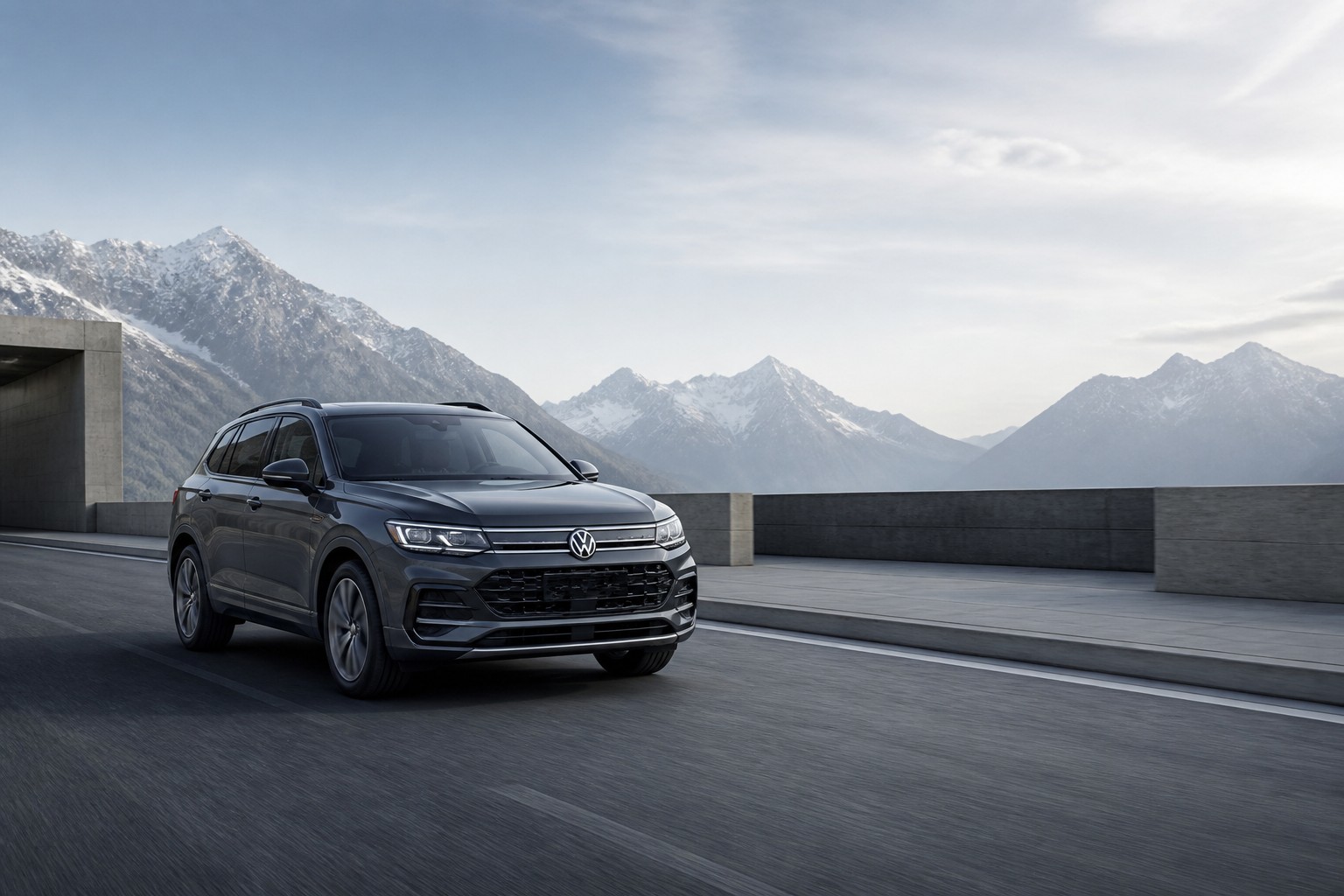
An eHybrid badge does not prove battery condition, charging compatibility or the electric range of a particular vehicle.
Decision boundary
Identify the global-market eHybrid version, production date, battery, six-speed eDSG, inlet and installed charging limits before using current official figures.
Continue the evidence route: Identify the full system in the Tayron powertrain guide, test regional functions through the software and account checks, and confirm destination support in the maintenance plan.
Evidence register
Record battery and powertrain diagnostics, state of charge, temperature, faults, charging inlet and labels, AC/DC session data, cable set, software and service history.
Where the risk sits
Current global Tayron eHybrid specifications cannot be transferred to a China-market Tayron L or another generation, and a connector adapter does not automatically solve protocol or compliance differences.
Candidate scenario
A buyer with reliable home charging may value electric daily use; a buyer without compatible charging or PHEV workshop support may carry cost without gaining the intended benefit.
Identify the complete charging chain
Photograph the inlet, pins, labels, supplied cables and vehicle charging menus. Record AC and DC limits for the exact global-market eHybrid and compare them with the destination’s voltage, connector, protocol and approved equipment. A physical adapter cannot automatically provide communication, thermal protection, earthing or legal compliance.
Build battery evidence from several signals
Join battery identifiers, fault history, state of charge, available health or cell data, temperatures, cooling behaviour and enclosure condition to one VIN. State the diagnostic tool and test limits. A dashboard electric-range estimate reflects recent use and conditions; it is not an independent battery-health certificate.
Test an ordinary and adverse electric route
Record ambient and battery temperature, tyres, load, speed, HVAC, starting charge and arrival reserve. Test AC and DC sessions where available with starting state, power curve and duration. Compare the result with the buyer’s daily route and fallback fuel use instead of promising the maximum published WLTP distance.
Plan destination service and handover
Confirm PHEV diagnostics, high-voltage workshop capability, cooling service, cable replacement and software support before export. Preserve state of charge, warnings, cable inventory and carrier battery-vehicle instructions at handover. Do not transfer eHybrid conclusions to a China-market Tayron L without verified equivalence.
Version-specific control
Ownership fit begins before shipment. Map the exact hardware to local fuel, fluids, diagnostic equipment, workshop competence, part numbers and software access.
Export and ownership consequence
Give the destination workshop the VIN identity, baseline scan, accepted condition and open maintenance actions. Record who must confirm each open field, what document or test closes it, and when that evidence expires.
Buyer hold points
Mark exact ehybrid version, battery evidence, charging inlet before commercial acceptance. Keep ac/dc test, electric route, destination support visible until the responsible reviewer closes them. A changed VIN, beneficiary, delivery point or accepted exception reopens the affected gate.
Arrival handover
Freeze odometer, warnings, keys, accessories, body condition and unresolved actions before loading. Compare arrival condition with the loading file before cleaning or repair, and preserve the record for claims and workshop handover.
Keep technical and commercial approval separate
Technical approval describes what the Tayron is and what condition evidence supports. Commercial approval covers price, included work, payment schedule and delivery boundary. Close both records before shipment. A concession can compensate for an understood repair or missing accessory; it cannot prove identity, legality or safety.
Stress-test the preferred choice
Model one plausible adverse outcome involving exact ehybrid version, battery evidence, charging inlet, ac/dc test, electric route, destination support: a delayed part, conflicting document, warning returning on a hot drive or destination requirement changing the budget. Decide whether that outcome triggers more evidence, a reserve or rejection before attachment to a favourite vehicle distorts the decision.
Audit the file before approval
Translate technical findings into a destination ownership plan. Identify the exact service fluids, diagnostic capability, software region, consumables and version-specific parts before assigning value to equipment. Ask a local workshop what it can actually support, especially for DSG, 4MOTION, PHEV, cameras and driver-assistance calibration. A feature that cannot be maintained, activated or repaired in the destination should not be priced as if full support were guaranteed.
Read the record as if the original salesperson were unavailable. The conclusion about exact ehybrid version, battery evidence, charging inlet, ac/dc test, electric route, destination support should remain traceable to dated evidence. Resolve contradictions rather than selecting the most convenient source, and preserve every market, year, test-condition or quotation-period limit beside the claim. Record the reviewer, review date, unresolved questions and next expiry point so another person knows what must be refreshed before approval.
Record the decision, not just the data
Finish with pass, hold or reject. A hold names the missing evidence, owner and deadline. Approval means the remaining limits are understood; it does not turn an unknown into a confirmed feature.
Keep a dated source beside every material conclusion. If the seller changes the vehicle, repeat the affected checks instead of carrying approval to another VIN or model year.
Check Tayron eHybrid Battery, Range and Charging: buyer checklist
- Exact eHybrid version
- Battery evidence
- Charging inlet
- AC/DC test
- Electric route
- Destination support
Primary and technical references
Use manufacturer or regulatory material for context; contract from the actual VIN and legal record.
Volkswagen Newsroom: Tayron engine versions ↗Volkswagen Newsroom: Tayron world premiere powertrains ↗Buyer questions
Can the current Tayron eHybrid use DC charging?
Volkswagen publishes DC charging for the current global generation, but verify the selected vehicle and destination network.
Is brochure electric range guaranteed?
No. Test cycle, equipment, tyres, climate, route and battery condition affect usable distance.
Can China Tayron L data prove a global eHybrid specification?
No. Keep market families and legal identities separate.