
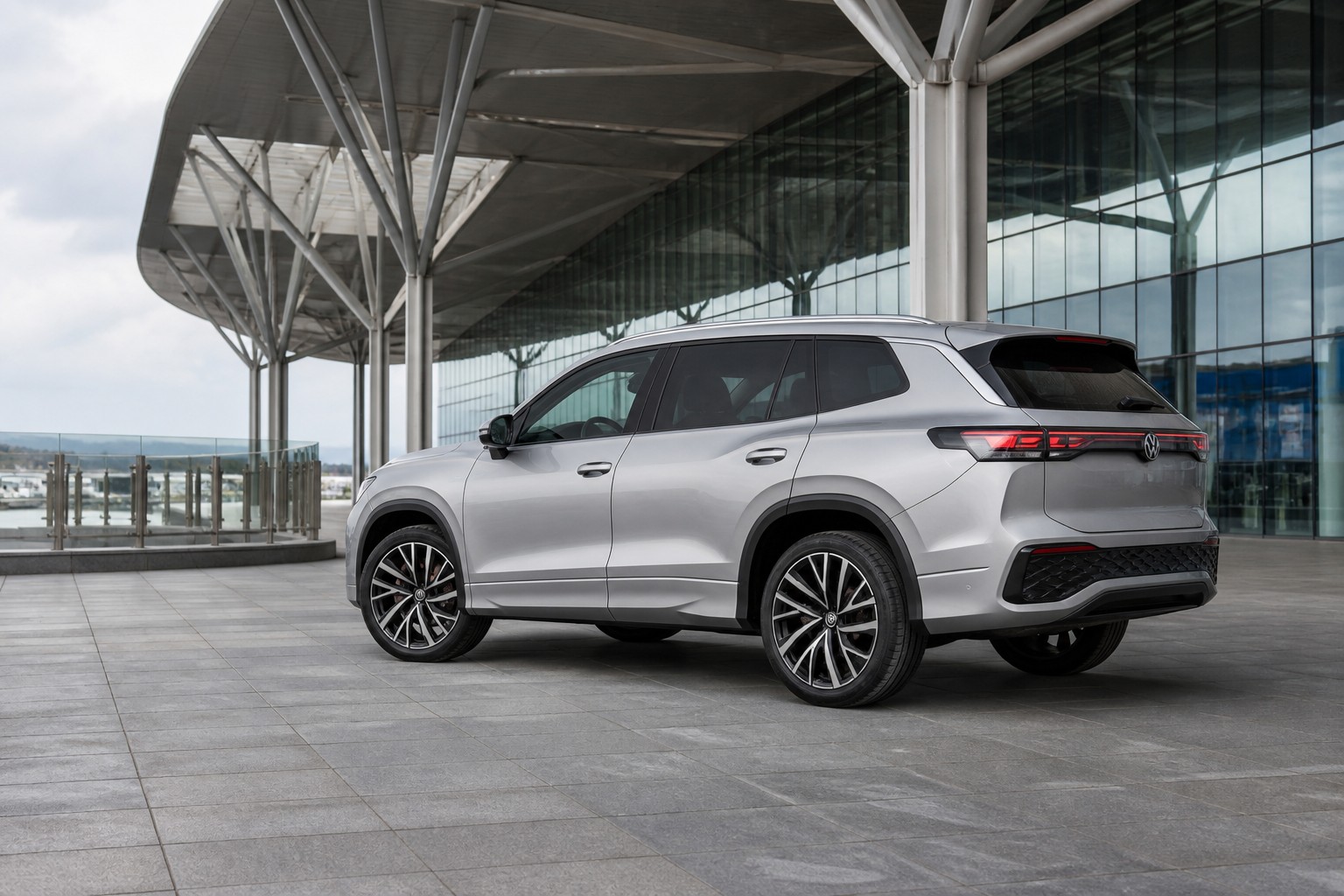
Five-seat, seven-seat and eHybrid Tayron layouts do not provide the same passenger or luggage result.
Decision boundary
Start with market, generation, powertrain and factory seating configuration, then test real occupants, child seats and luggage on the selected vehicle. For children travelling regularly, assess the actual restraint, passenger and luggage combination.
Continue the evidence route: First separate the vehicle in the Tayron generation and version guide, confirm dimensions through the specification method, and carry the loaded configuration into the shipping plan.
Include loading access and closure in the electric tailgate inspection.
Evidence register
Request VIN-linked seating photographs, belt and head-restraint count, second-row movement, third-row access, cargo measurements, payload label and fitted parcel or load equipment.
Where the risk sits
A brochure maximum can use a different seat layout, measurement boundary or market version. The current global eHybrid is not offered with the third row described for non-PHEV versions.
Candidate scenario
A seven-seat badge may suit occasional passengers but leave insufficient luggage space; a five-seat eHybrid may suit daily charging while changing cargo geometry.
Prove the factory seating layout
Count belts and head restraints, photograph every row and reconcile the legal seating capacity with the VIN-linked configuration. Check whether the third row is factory fitted, how the second row moves for access and whether missing covers, latches or trim indicate removal or repair. Do not describe a five-seat vehicle as seven-seat capable merely because a related version offers the option.
Run an occupant and child-seat test
Set the first row for real drivers, then check second- and third-row knee room, head room, entry path, belt geometry and required child-seat locations. Confirm destination restraint rules separately. An occasional third row can be useful without being comfortable or appropriate for every occupant, trip length or child restraint.
Measure the loaded family case
Test the largest suitcases, pushchairs, mobility equipment or work cases with the required seats in use. Record the opening, floor length, height, seat-fold steps, parcel equipment and visibility. A maximum brochure volume with rows folded cannot answer whether seven occupants and their luggage fit at the same time.
Keep payload and shipping visible
Add occupants, luggage, accessories and any imposed towbar load within the selected vehicle’s gross and axle limits. Record seats and loose equipment before loading for export. A different seating layout can change vehicle mass, cargo floor and shipping preparation, so carrier and destination documents should describe the actual configuration.
Version-specific control
Identity controls the rest of the purchase. Keep original-language legal records beside translations. A badge, trim label or brochure photo remains secondary to the VIN, production data and diagnostic identity.
Export and ownership consequence
After identity is stable, use the result to select inspection procedures, parts references, shipping dimensions and destination conformity questions. Record who must confirm each open field, what document or test closes it, and when that evidence expires.
Buyer hold points
Mark market and version, factory seat count, third-row access before commercial acceptance. Keep child-seat fit, cargo test, payload visible until the responsible reviewer closes them. A changed VIN, beneficiary, delivery point or accepted exception reopens the affected gate.
Arrival handover
Freeze odometer, warnings, keys, accessories, body condition and unresolved actions before loading. Compare arrival condition with the loading file before cleaning or repair, and preserve the record for claims and workshop handover.
Turn uncertainty into a named action
Avoid conclusions such as “looks fine” or “probably standard.” An open question about market and version, factory seat count, third-row access should request a precise VIN photograph, legal record, diagnostic result, measurement, road-test observation or destination ruling. Assign an owner and deadline. Do not release payment while missing evidence can change safety, legality or a high-cost repair.
Prepare the receiving workshop
The destination handover should identify the generation, legal model, powertrain, keys, service evidence, diagnostic baseline and accepted condition. Include decisions about child-seat fit, cargo test, payload. This reduces wrong-part orders and helps distinguish shipping damage from a pre-existing issue.
Audit the file before approval
Treat identity as a chain of matching evidence, not a model name copied from an advertisement. Compare the VIN plate, production date, legal registration, engine and gearbox identifiers, wheelbase and installed equipment. If a brochure is cited, record its country and model year beside the figure. Global Tayron, China-market Tayron, Tayron L and Tayron L Pro material should never be merged unless the exact equivalence has been proved for the candidate vehicle.
Read the record as if the original salesperson were unavailable. The conclusion about market and version, factory seat count, third-row access, child-seat fit, cargo test, payload should remain traceable to dated evidence. Resolve contradictions rather than selecting the most convenient source, and preserve every market, year, test-condition or quotation-period limit beside the claim. Record the reviewer, review date, unresolved questions and next expiry point so another person knows what must be refreshed before approval.
Record the decision, not just the data
Finish with pass, hold or reject. A hold names the missing evidence, owner and deadline. Approval means the remaining limits are understood; it does not turn an unknown into a confirmed feature.
Keep a dated source beside every material conclusion. If the seller changes the vehicle, repeat the affected checks instead of carrying approval to another VIN or model year.
Verify Tayron 5-Seat, 7-Seat and Cargo Space: buyer checklist
- Market and version
- Factory seat count
- Third-row access
- Child-seat fit
- Cargo test
- Payload
Primary and technical references
Use manufacturer or regulatory material for context; contract from the actual VIN and legal record.
Volkswagen Newsroom: Tayron interior ↗Volkswagen Newsroom: Tayron world premiere ↗Buyer questions
Is every Tayron available with seven seats?
No. Seating availability depends on market, powertrain and version.
Can an eHybrid Tayron have the same third row?
Current global Volkswagen material separates the five-seat eHybrid from the optional seven-seat non-PHEV layout.
Does cargo volume prove family fit?
No. Test the actual people, seats, largest luggage and loading arrangement.